01 / Executive brief
Executive summary
Hao Zhang worked at Skyworks while a collaborator worked at Avago, placing the pair on opposite sides of the specialized radio-frequency filter market. Instead of treating their employers' surface- and bulk-acoustic-wave processes as separate confidential portfolios, the collaborators shared protected know-how and used the combined package to plan a competing manufacturing business in China. S1S2
The commercialization route ran through Tianjin University appointments, Chinese patent applications, an offshore entity, a university subsidiary, and a manufacturing venture called ROFS. After a bench trial, a federal judge convicted Zhang of economic espionage, trade-secret theft, and conspiracy, ordered $476,835 in restitution, and required forfeiture of patents derived from stolen Avago technology. S1S2
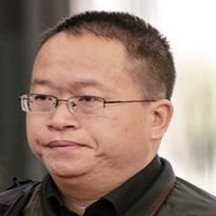
Hao Zhang, the former Skyworks engineer and Tianjin University professor convicted in the radio-frequency filter case. DCSA/CDSE publishes this portrait with its official case study.
Defense Counterintelligence and Security Agency / CDSE · Editorial use; published by DCSA/CDSE
Surface-acoustic-wave filters are compact components that separate radio bands inside communications equipment. The case concerned protected filter designs and manufacturing processes. Contextual image; not a component made by the parties.
Mister rf · CC BY-SA 4.0 ↗02 / The vignette
What happened
Two employers supplied complementary secrets
Mobile devices rely on tiny acoustic filters to isolate desired radio bands. Zhang's Skyworks role and Wei Pang's Avago role exposed them to different confidential designs, processes, and manufacturing methods. Trial evidence showed that those employer boundaries were crossed as secrets moved among collaborators developing a single competing plan. S1S2
Academic appointments became industrial infrastructure
In 2009, Zhang and Pang obtained Tianjin University professorships tied to creating a micro-electromechanical-systems laboratory. The group pursued Chinese patent applications and organized corporate entities; a Tianjin University subsidiary and an offshore collaborator entity then formed ROFS to manufacture products realized from the acquired technology. S1S2
The court connected theft to state benefit
Zhang was arrested after arriving in Los Angeles in 2015. Following a four-day bench trial, the court found that he stole Avago and Skyworks trade secrets, intended to build a competing China-based business, and knew it would benefit PRC instrumentalities including Tianjin University. He received 18 months in prison, restitution, supervised release, and forfeiture of patents obtained with stolen Avago technology. S1S2
03 / Anatomy
How access became transfer
This chain reconstructs the sequence supported by the cited record. It does not imply that every legitimate relationship follows the same path.
- 01
- 02
- 03
Information acquired
Secrets shared across employers
Trial evidence showed Zhang and Pang illicitly shared employer trade secrets with one another and with collaborators in China. S1
- 04
- 05
Technology put to use
Manufacturing venture created
A Tianjin University subsidiary and the collaborators' offshore entity formed ROFS to manufacture products realized from the trade secrets. S1
- 06
Competitive harm
Economic espionage proved
The court convicted Zhang and ordered imprisonment, restitution, supervised release, and forfeiture of U.S. patents derived from stolen Avago technology. S1
04 / Evidence boundary
What is established—and what is not
Established in the record
- The trial court found that Zhang stole Avago and Skyworks filter trade secrets and intended to use them in a new China-based business. S1
- The court found that Zhang knew the venture would benefit PRC instrumentalities, including Tianjin University. S1
- The commercialization structure joined university appointments, patent filings, an offshore entity, a university subsidiary, and a manufacturing venture. S1S2
05 / Sequence
Timeline
-
Parallel employment begins
Zhang joined Skyworks, Pang joined Avago, and the collaborators began formulating a China-based competing business. S1
-
University appointments
Zhang and Pang obtained Tianjin University professorships tied to creating a micro-electromechanical-systems laboratory. S1
-
Zhang arrested
Federal agents arrested Zhang after he arrived in Los Angeles; the Justice Department announced the charges three days later. S2
-
Sentence imposed
Following his bench-trial conviction, Zhang received 18 months in prison and was ordered to pay $476,835 in restitution. S1
06 / People and institutions
Who appears in the public record
Hao Zhang
Former Skyworks engineer, Tianjin University professor, and venture participant
Outcome: Convicted at trial and sentenced to 18 months, restitution, supervised release, and patent forfeiture
Wei Pang
Former Avago engineer and alleged co-conspirator named in the charging record
Outcome: Not adjudicated in the sources cited here
Tianjin University
PRC university found by the trial court to be an instrumentality expected to benefit from the venture
ROFS Microsystems
Joint venture formed to manufacture products using the transferred filter technology
Originator / affected institution
Avago Technologies
Developer and owner of protected FBAR and related filter technology
Originator / affected institution
Skyworks Solutions
Developer and owner of protected radio-frequency filter technology
07 / Consequences
Documented and attributed harm
The sentencing court ordered $476,835 in restitution to Avago and Skyworks and forfeiture of patents obtained with stolen Avago technology. S1
The trade secrets supported a manufacturing venture positioned to compete in radio-frequency components used in consumer and military applications. S1
08 / Hindsight analysis
Where leadership could have seen risk
These are our analytic judgments based on the public record, not court findings. They are framed to improve controls without treating nationality as a risk factor.
Complementary insiders bridged silos
Employees at two competing firms could combine protected knowledge into a fuller manufacturing package than either person held alone.
Appointments became a transfer channel
University roles, patents, offshore entities, and a joint venture converted insider knowledge into an organized commercialization pathway.
Patent activity surfaced too late
Related patent filings can reveal protected technical claims, but only if employers monitor inventor and affiliate activity through a lawful review process.
09 / Apply the lesson
Actions leaders can take
- companies
Model collusive insider risk
Look for coordinated access, communications, and departures across employees who hold complementary portions of a crown-jewel process, subject to legal and privacy controls.
- both
Reconcile appointments and patents
Compare disclosed outside appointments, company formation, and inventor activity with confidentiality, invention-assignment, and sponsored-research obligations.
- companies
Protect process combinations
Map the set of recipes, tolerances, tooling, and troubleshooting knowledge needed to reproduce a product—not just individual files—and segment access accordingly.
10 / Source record
Sources
Links point to the public record reviewed for this file. Government releases can summarize court proceedings but remain government-authored sources; the source note identifies those limits.
- S1 government release
Chinese Citizen Sentenced for Economic Espionage, Theft of Trade Secrets, and Conspiracy ↗
U.S. Attorney's Office for the Northern District of California · Published Sep 1, 2020 · Retrieved Aug 23, 2026
Sentencing and bench-trial findings, including the beneficiary, commercialization path, restitution, and forfeiture.
- S2 government release
Chinese Professors Among Six Defendants Charged with Economic Espionage and Theft of Trade Secrets ↗
U.S. Department of Justice · Published May 19, 2015 · Retrieved Aug 23, 2026
Charging-stage chronology and entity structure; allegations against people other than Zhang are not treated as adjudicated.